
- Maximizing Vertical Real Estate in Your Culinary Workspace
- Strategic Cabinet Door Utilization
- Implementing Zone-Based Organization Systems
- Creating Efficient Workflow Triangles
- Mastering Container and Storage Solutions
- Drawer Organization Fundamentals
- Strategic Appliance Placement and Storage
- Creating Appliance Zones
- Frequently Asked Questions About Small Kitchen Organization
Maximizing Vertical Real Estate in Your Culinary Workspace
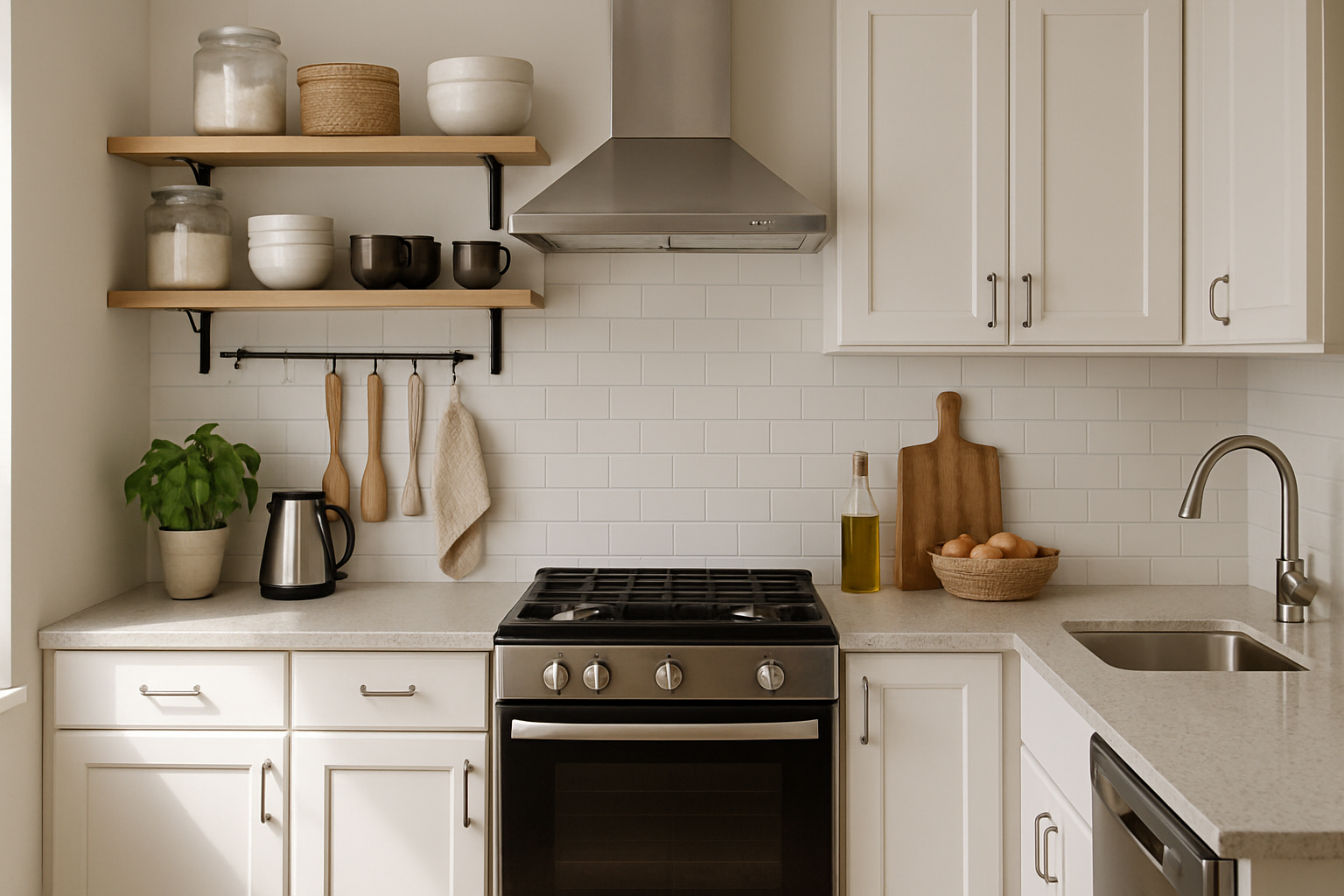
Small kitchens demand strategic thinking when it comes to spatial optimization. The key lies in exploiting every square inch of vertical territory available within your culinary domain. Wall-mounted storage solutions transform previously unutilized surfaces into functional repositories for your essential cooking implements.
Installing floating shelves creates additional staging areas for frequently accessed items. These ethereal platforms, when crafted from durable materials like beechwood or stainless steel, provide both aesthetic appeal and robust functionality. Position them at varying heights to accommodate different utensil categories and create visual interest throughout your compact cooking space.
Magnetic strips affixed to walls offer ingenious solutions for knife storage while freeing valuable counter real estate. These sleek organizational elements keep sharp implements within arm's reach yet safely secured. Similarly, pegboard installations create customizable hanging systems that adapt to your evolving culinary needs.
Strategic Cabinet Door Utilization
Cabinet interiors often harbor untapped potential for organizational excellence. The reverse side of cabinet doors presents prime real estate for mounting slim storage racks, spice containers, or cleaning supply holders. This overlooked territory can accommodate an impressive array of kitchen necessities without compromising the cabinet's primary storage function.
Over-door organizers maximize this vertical frontier, creating dedicated zones for frequently used condiments, measuring implements, or cleaning essentials. These ingenious contraptions transform dead space into highly functional storage compartments.
Implementing Zone-Based Organization Systems
Professional chefs understand the paramount importance of establishing distinct operational zones within their culinary workspace. This methodology proves especially crucial in compact kitchen environments where every movement must be deliberate and efficient.
The foundation of professional kitchen organization rests upon the principle of grouping related items within designated zones, creating intuitive workflows that minimize unnecessary movement and maximize productivity.
Designate specific areas for food preparation, cooking, cleaning, and storage. Position cutting boards, knives, and prep bowls within your preparation zone. Cluster cooking utensils, seasonings, and oils near your stovetop. This strategic positioning eliminates the chaotic scramble for essential tools during critical cooking moments.
Creating Efficient Workflow Triangles
The legendary kitchen triangle concept—connecting refrigerator, sink, and cooking surface—becomes even more critical in space-constrained environments. Optimize this triangular pathway by ensuring minimal obstructions and maximum accessibility between these three fundamental stations.
Consider the ergonomic implications of your organizational choices. Items used in tandem should reside within the same proximity zone. Coffee-making supplies belong together, baking ingredients deserve their dedicated territory, and cleaning supplies require strategic placement near the sink area.
Mastering Container and Storage Solutions
Effective small kitchen organization hinges upon selecting appropriate containment systems that maximize space efficiency while maintaining accessibility. Uniform containers create visual harmony while optimizing storage density within limited cabinet and pantry real estate.
Transparent storage vessels allow instant visual inventory of contents, eliminating guesswork and reducing food waste. Square or rectangular containers nestle together more efficiently than their circular counterparts, maximizing available shelf space. Invest in high-quality, stackable options crafted from durable materials that withstand repeated use and washing.
Drawer Organization Fundamentals
Drawer chaos represents one of the most common organizational failures in small kitchens. Custom dividers and modular organizers transform these potential problem areas into highly functional storage systems. Allocate specific compartments for different utensil categories, ensuring each implement has a designated home.
Tiered drawer organizers maximize vertical space within these horizontal storage compartments. This layered approach accommodates more items while maintaining easy access to frequently used tools. Consider adjustable dividers that adapt to your evolving collection of culinary implements.
Strategic Appliance Placement and Storage
Small kitchen success demands thoughtful consideration of appliance positioning and storage strategies. Not every appliance deserves permanent counter residence—evaluate usage frequency to determine optimal placement hierarchy.
Daily-use appliances like coffee makers or toasters earn their counter positions through consistent utility. Occasional-use items such as stand mixers or specialty processors should retreat to cabinet storage when not actively employed. This rotation system maintains uncluttered work surfaces while preserving appliance accessibility.
- Store lightweight appliances on upper shelves
- Position heavy equipment at counter level or below
- Utilize appliance garages for frequently used but visually cluttering items
- Consider multi-functional appliances that serve multiple culinary purposes
- Implement pull-out shelves for easy access to stored appliances
Creating Appliance Zones
Establish dedicated appliance neighborhoods that support specific cooking activities. Cluster your coffee maker, filters, mugs, and coffee supplies in one cohesive area. Group baking appliances with measuring tools, mixing bowls, and baking ingredients. This zoning approach streamlines cooking workflows while maintaining organizational clarity.
Frequently Asked Questions About Small Kitchen Organization
How often should I reorganize my small kitchen storage systems?
Evaluate your organizational systems quarterly, adjusting arrangements based on cooking habit evolution and seasonal ingredient changes. This regular assessment ensures your storage solutions continue serving your culinary lifestyle effectively.
What's the most efficient way to organize spices in a compact kitchen?
Alphabetical organization within uniform containers provides the fastest identification system. However, grouping by cuisine type or cooking frequency may better serve adventurous cooks who frequently experiment with diverse flavor profiles.
Should I prioritize aesthetics or functionality in small kitchen organization?
Functionality must take precedence in space-constrained environments, though well-chosen organizational tools can deliver both efficiency and visual appeal. Quality materials like stainless steel and natural wood provide durability while maintaining aesthetic sophistication.
Transforming a compact kitchen into a highly organized culinary workspace requires strategic thinking, quality organizational tools, and consistent maintenance. By implementing these professional-grade organizational strategies, your small kitchen can achieve efficiency levels that rival much larger culinary spaces. The investment in proper storage solutions and systematic organization pays dividends through enhanced cooking enjoyment and reduced kitchen stress.
Share:
Stay Cool in Small Spaces: Best Mini Fans for Tiny Kitchens